My sister asked me recently if I felt hopeless. Ordinarily, when she calls, she leads with “Hi.” But we’d been talking about aging and my attitude toward my own life, so “Do you feel hopeless about life?” wasn’t entirely out of left field.
“No,” I said. “I feel okay.”
“Right!” she said, and I knew we weren’t talking about me—or just me.
A friend of hers had asked, “How are you?” My sister, who is genuinely doing well right now, responded with something like, “Good. How are you?” You know, the typical American response—sometimes not quite the truth, but given out of habit because you don’t feel like being honest, and no one expects you to be anyway.
Of course, my sister asked the obligatory “How are you?” in return. But her friend was honest; she felt hopeless about the world and carried herself like someone who had lost hope. This immediately made my sister feel like a shallow asshole. She definitely said shallow; I don’t remember if she said asshole.
The Americans I know and spend time with—even the Republicans—have frequently felt hopeless since January 20. I assume my readers are also news readers, or at least news followers. I’m pretty sure my son and his friends get their news from alternative media—i.e., not The New York Times, the Associated Press, or, God forbid, The Atlantic.
No matter the source, every day brings some new horror; some days, there are multiple horrors. We aren’t even 100 days into the latest Trump administration, and our country has managed to alienate nearly every ally while cozying up to a notorious dictator and enemy.
Overnight—at least it feels like overnight—America has gone from being the big, slightly naïve friend you could count on in a tight spot to the big, dumb bully on the playground.
Hard to believe, but as terrible as the United States is to its neighbors, it is even more terrible to its own citizens and visitors, and worse still to the nation’s Constitution.
The fundamental rights of American society are established in our First Amendment—an amendment even more sacred than the Second, which is regularly defended with near religious fervor.
The First Amendment reads:
Congress shall make no law respecting an establishment of religion, or prohibiting the free exercise thereof; or abridging the freedom of speech, or of the press; or the right of the people peaceably to assemble, and to petition the Government for a redress of grievances.
These rights are protected regardless of citizenship status. You can’t be arrested for attending a rally or holding an opinion, so long as you don’t incite a riot. Unless you’re Donald Trump. You can’t prohibit a news outlet from reporting on the government. Unless you’re Donald Trump. You can’t fire entire teams of people without cause. Unless you’re Donald Trump—or his henchman, Elon Musk.
(Side note: Musk’s son recently told Donald that he, Donald, “isn’t really the President.” Precocious or coached?)
And our elected Congress does, quite literally, nothing.
Republicans are gleeful that, as repugnant as he is and as unhinged as he seems, Donald Trump is the perfect fall guy to help them accomplish their long-held conservative government agenda. Many of his supporters think he’s doing a great job—until grants that benefit them, grants that have already been approved by Congress, are suddenly canceled. Or until another social safety net crucial to their communities is put on the chopping block.
Democrats, meanwhile, are weak-willed, especially those in power. Despite Democratic voter anger, they cave, clinging to some naive hope of bipartisan cooperation.
And there’s that word again—hope. When the first four rights of the First Amendment have fallen, all hope rests on the last: the right of the people to petition the Government for a redress of grievances.
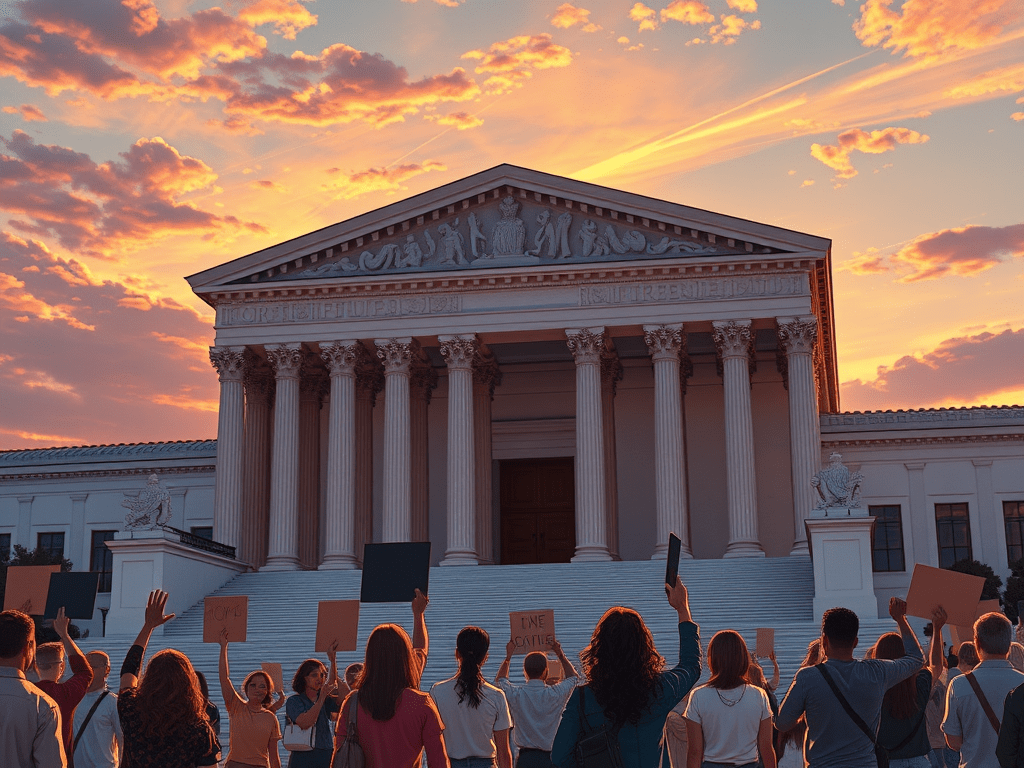
I’ve heard that a three-legged stool is the most stable. The United States is teetering on its last leg—the Supreme Court, which Republicans finagled into a conservative majority. Perhaps foolishly, I have some faith in the Court’s ability to recognize the many egregious affronts to the fundamental rights of those in the United States as unconstitutional.
So no, I am not hopeless. Are you?


 Snide Reply
Leave a reply to Mary Rayis Cancel reply