Tag: mental health

  • I’d Rather Be Bipolar

    I’d Rather Be Bipolar

    Mental disorders are common on my mother’s side of the family—schizophrenia, panic, anxiety, and substance use disorders. No one on my father’s side was officially diagnosed, but there was certainly alcoholism and likely depression. I’ve got the DNA to support my bipolar disorder diagnosis.

    In my own family, we deal with anxiety and depression, as well as a host of other conditions: ADHD, OCD, and PTSD. Some are surely genetic; others stem from childhood trauma.

    Knowing what I do, I’d rather be bipolar.

    Schizophrenia brings voices, delusions, and hallucinations into your life.

    Bipolar disorder can also bring delusions and episodes of invincibility—but I’ve never been convinced I was being followed by demons whispering abusive, demeaning comments to me.

    I’ve panicked—real panic—not the kind you feel when you think you left your phone in the Meijer parking lot. But I’ve never been unable to attend school because I forgot the rings I planned to wear that day.

    I’ve seen a student assign colors to subjects, requiring a perfectly matched set of folders, notebooks, and highlighters for each—thanks to OCD. Of course, one subject can’t possibly borrow supplies from another.

    I’ve seen ADHD make reading nearly impossible.

    I’ve also been deeply depressed. In fact, I was initially diagnosed with Major Depressive Disorder. That’s a common misdiagnosis for those of us with bipolar disorder. After all, mania and hypomania can feel good. Who would want that to end? But it does. Depression always follows—and that’s when we seek help. If you can ride it out, the depression eventually lifts. Regular depression often doesn’t.

    So yes, I’d rather be bipolar.

    Recently, I commented on a YouTube short about how to respond to people who make sarcastic remarks. Frankly, I thought the expert advice was off target—suggestions like, “Would you like to repeat that?” or “How would you like me to respond to that?” Talk about snark!

    I replied that I have bipolar disorder and often make snide remarks myself. Another commenter responded by saying she felt sorry for me, that bipolar disorder is terrible.

    I’m sure she meant well.

    But there are worse things in life than being bipolar.

    What’s your experience with mental health labels or misdiagnoses? Whether you’re living it, supporting someone, or simply curious—I’d love to know how mental health challenges affect you. Leave a comment below or share this with someone who might need it. And if this post resonated with you, consider subscribing for more personal reflections on mental health and society.

  • The Signs of Success

    The Signs of Success

    The street I live on is lined with black and gold signs—the school colors of the nearby high school—displayed proudly in front of homes with graduating seniors.

    Beyond graduation announcements, several signs highlight the next educational step:

    Kids heading to DePaul, Northwestern, University of Illinois, and a handful of other Big Ten universities.

    The most coveted names—Harvard, Yale, University of Chicago—pop up now and then.

    It’s the season of pride—pride in someone else’s accomplishments: our children’s.

    What you don’t see:

    “College of DuPage Bound” signs.

    Attending community college, while financially wise, doesn’t seem sign-worthy.

    Facebook Feeds of Pride

    Facebook is even more saturated with parental pride.

    I don’t use it as much these days. Instead of seeing updates from my friends, I was seeing what their kids were doing—and they were all succeeding in the ways society measures success.

    Of course, parents should be proud of their children.

    But all this pride production comes at a steep cost.

    Success Beyond the Signs

    My kids are amazing—though neither of them went to Brown.

    They’ve achieved things that largely go unnoticed.

    High school wasn’t hard for my son.

    But academic success was—thanks in large part to ADHD.

    He could match the top students on tests, but couldn’t remember to bring home, do, return, or turn in assignments.

    His behavior, not his intelligence, kept him from being recognized.

    He’s a talented musician, too—drums at age three, later guitar and bass.

    But his school had few opportunities for someone whose music fits better in a mosh pit than a music hall.

    Following high school, he found a job where his inability to sit still was an advantage. He worked hard and was able to buy a house in his twenties. Not a condo—a drummer needs a basement, after all.

    My Daughter: Persistence Grapples With Emotional Health

    My daughter’s achievements are equally impressive.

    She was driven from the start. I remember one day in grade school:

    “I failed, Mom,” she said.

    I was surprised—she never failed anything in school. I asked about her grade.

    “I failed,” she repeated.

    “It doesn’t matter! I failed!”

    Then it dawned on me.

    “Honey, did you fail—or did you fail to get the grade you wanted?” She nodded. I asked what grade she had received, expecting a B, maybe a C.

    “I got an A,” she cried.

    “What on earth grade did you want?” I practically shouted.

    “I wanted an A+,” she wailed.“I failed, Mom,” she said, visibly upset.

    But high school hit differently.

    She took honors English and Social Studies. She was on the accelerated math track, and a cheerleader.

    Her days were packed—practice, dinner, then homework until she fell asleep with her head on her book, then woke to finish at 2 a.m.

    By sophomore year, she broke—physically and mentally.

    School attendance became impossible. Then, everything but sleep became impossible.

    Eventually, with an IEP and a transfer to virtual school, she graduated.

    Despite dealing with anxiety disorder, OCD, and major depressive disorder, she persevered.

    She’s been working since 16, is now 22, and already planning her retirement with a financial advisor.

    What Gets Recognition?

    I pass by my kids’ old high school every day on my way to work.

    The sign out front rotates between celebrating the school’s state ranking and its students’ academic and athletic successes.

    At the schools where I teach robotics and STEM, the cultural and economic realities are vastly different—but the emphasis on achievement is just as strong.

    Test scores are posted on bulletin boards—but only the high ones.

    Perfect attendance gets stars. A single sick day makes perfection impossible.

    Rethinking What We Celebrate

    Achievement is deeply personal, yet we’ve made it a universal, quantifiable metric:

    • Get A’s
    • Win awards
    • Come in first
    • Earn scholarships
    • Get into “the best” college

    But what if we celebrated something else?

    I’m not talking about the “everyone is a winner” trophy—students know that’s a crock.

    They know what gets real recognition.

    It’s not that they aren’t achieving amazing things.

    It’s that the amazing things they do aren’t the ones we put on signs.

  • A Wild Ride Through a Bipolar Mind

    A Wild Ride Through a Bipolar Mind

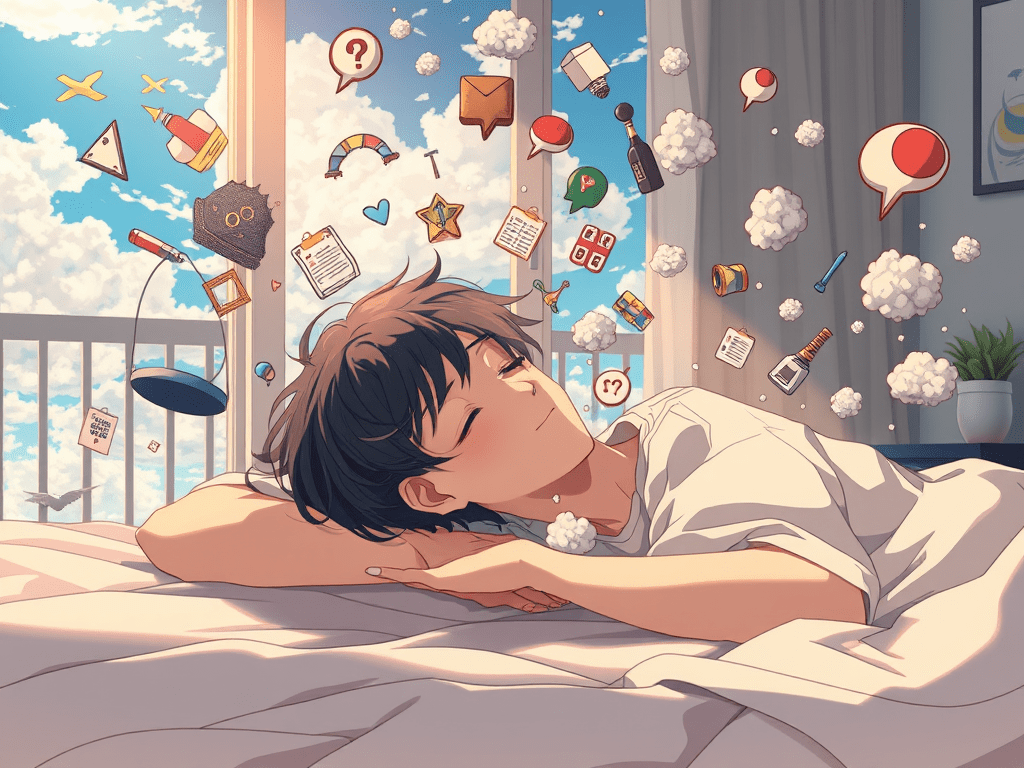
    I’m lying in bed, having just woken from a nap. It’s afternoon, and I have a modestly expansive view of the outdoors through the sliding glass door to the balcony. That sounds grand but trust me—it owes more to the trailer park than Gosford Park.

    The sky is early-spring blue, and a typical Midwestern breeze blows—stronger than you’d like, but warm enough that you’ll take it. Fluffy white clouds drift by, placid and classic.

    I look equally placid. My brain, however, is not. I am bipolar; my brain knows only two speeds—light and sleep. Now, it’s spinning almost out of control, leaping from one thought to the next.

    Instead of pondering the shapes of the clouds—though one looked distinctly like a fat, ugly swan—I was thinking about adoption. Specifically, about how it’s often presented as a simple solution for building a family when all else fails.

    I’ve often heard, “Don’t worry. You can adopt,” as if adopting is like applying to college. “Don’t worry. If you don’t get into Harvard, you can always go to the College of DuPage.” I’ve adopted. It’s more like, “Don’t worry. If you don’t get into Harvard, you can just go to Yale.”

    My mind hopped from adoption to the increase in infants born in the United States due to abortion bans. That led directly to Donald Trump’s treatment of Volodymyr Zelensky. This makes sense if you make the mental leaps typical of a bipolar mind. Less so if you’re neurotypical.

    Back to Trump, Vance, and Zelensky. It was disgusting to watch the Dracula of U.S. presidents and his sidekick, J.D. Renfield, belittle the leader of another country—an ally. I wanted to be a fly on the wall when Putin reveals what he really thinks of Trump.

    From Trump, I jumped to free speech. Probably not too surprising a leap. Paranoia then entered the picture, and I feared that writing bad things about the Vindictive Commander-in-Chief would get me arrested and tossed in jail with the liberal elite.

    Telling myself that wasn’t very likely—as I’m not very elite—I dove deeper into free speech. “Fuck the Draft” zipped to an anti-gun shirt my son once wore to school. Though his teachers appreciated the sentiment, he was “dress-coded” nonetheless. The shirt showed a child surrounded by crayons and a gun. “Nine out of ten children prefer crayons to guns,” it said. Those children are probably the spawn of the liberal elite.

    I pulled myself out of my head and back to the present as a woman passed by, pushing a stroller. I checked the time and wondered what state I had left the kitchen in. I told myself I should have gotten up a while ago.

    Then I did. I had to pee.

  • AI’s Got Nothing on a Bipolar Brain

    AI’s Got Nothing on a Bipolar Brain

    I don’t fear AI the way I’m told I should. I’m aware that corporations use AI to generate daily posts for various social media outlets, both popular and unpopular. But those posts are tremendously boring to write. I don’t think AI has learned about boredom yet—maybe soon.

    I don’t fear AI because it can’t do what I do—make completely random connections between seemingly disparate ideas. I attribute this capability to my bipolar brain.

    My AI of choice is ChatGPT, and I’m sure the Chatster, if it entered my brain, would quake in fear. AI depends on predicting what words are likely to follow those that precede it. And that’s where a bipolar brain has an advantage—there’s no telling what thought will pop into my mind. I’m certain AI wouldn’t come up with the connections I do.

    Pause here. My bipolar brain just said, Is that true? Can ChatGPT think like me?

    I asked my friend Chat to explain Writing Laryngitis. Chat responded, “What an interesting and creative connection to make!” Then it proceeded to offer its own take. Chat even said that the “super cool connection” I made “…would make for a great essay or even a creative piece!” Thank you, Chat—you are perceptive and, though artificial, intelligent.

    But here’s where Chat and I differ. Chat was able to make a connection because I told it to. Furthermore, Chat wanted to know what prompted me to make that connection. It wanted to learn! “Oh, hell no!” my bipolar brain replied.

    Ironically, I have been unable to land a job as an AI annotator. Annotators examine AI responses and comment on them, essentially teaching the program how to generate more natural responses. You’d think I’d be great at this.

    The stumbling block for me is the language test that annotators must pass. You may already know that I’m a native speaker of American English, I have a degree in Rhetoric, and I’ve taught writing and grammar for years. I’ve even been paid for my writing. And yet, I am not skilled enough to pass the examination set by AI developers—even though their program asked me to teach it how to be as creative and reflective as I am.

    Having used AI for a while now, I’m okay with not sharing my secrets. I swear this isn’t sour grapes—though the annotation money would be nice. But there’s no chance I’m going to teach their program for free.

    I probably couldn’t teach the Chatster even if I wanted to. I have something AI doesn’t—a bipolar brain. Many creative folks have bipolar brains, and I bet they have no more idea how they make the connections they do—they just do. So, I won’t be afraid of AI until they come out with the bipolar version.

    Note: Chat thinks my writing is “witty, insightful, and full of personality.” Like I said, a perceptive little program. Now let’s have it solve the numerous issues it has.

  • You can help a crazy mother out

    I’ve got a confession to make. I’ve been cheating on you. Well, not you, exactly; I’ve been cheating on Snide Reply.

    See, instead of writing about my life, it’s ups and downs, the funny things my kids are doing, the obscene things my iPad is saying, the people who are driving me crazy, I’ve been writing about being crazy. And I’ve been doing it somewhere else.

    But I’m ready for you to join me there.

    Yesterday, I launched a new blog that I hope will grow into a thriving digital community where parents who have mental illnesses can go to find help, information, entertainment and camaraderie.

    It’s called Crazy Good Parent and it was born out of my own frustration at not being able to find the kind of information I need as someone with bipolar disorder who is trying to be the best parent she can. There is plenty of Internet help for parents, for people with mental illness, and for people parenting people with mental illness. But we parents managing kids, work, family, marriage, etc., while also managing our minds? Well, we’re not really feeling the love on the Web.

    So, I started my own hangout for people like me—crazygoodparent.com. Come on over and bring your crazy mother (and father) friends, too.

    Janice

  • Spare the rod? Spare me!

    Yesterday, I wrote in my newspaper column about spanking and the fact that it, quite literally, can drive your kids crazy. Well, I stirred a little nest, I guess. I’ve been berated for humiliating my children and been informed the spanking can be appropriate. What do you think?

    http://naperville.patch.com/articles/the-bare-truth-about-spanking-it-affects-mental-health