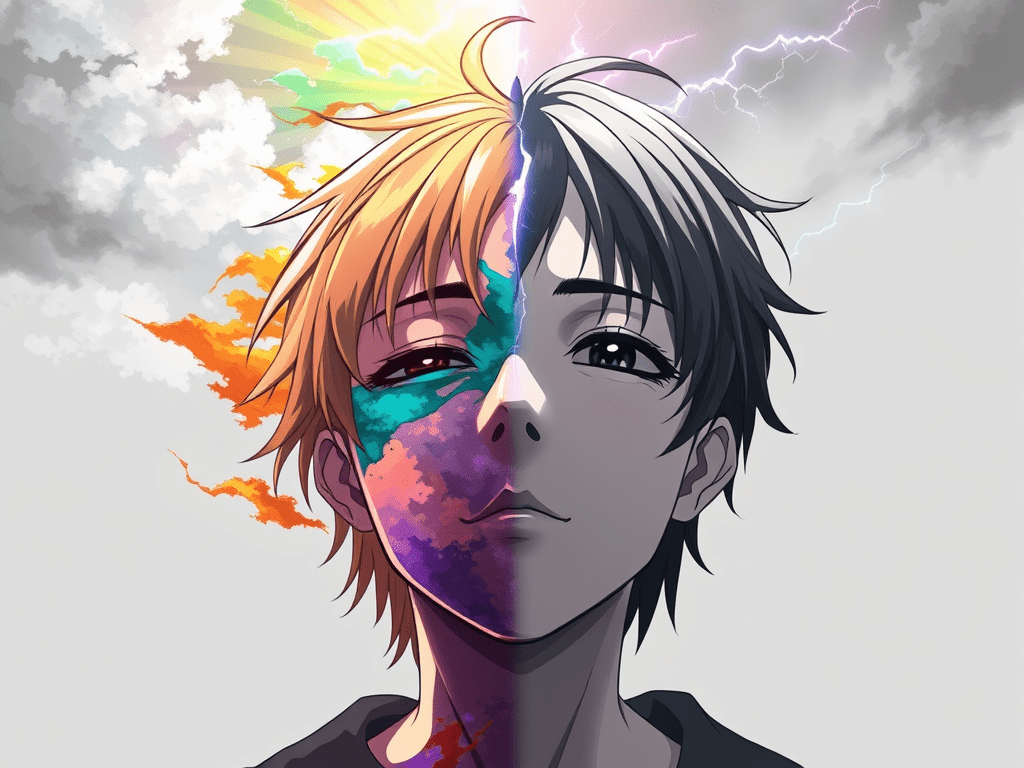
Mental disorders are common on my mother’s side of the family—schizophrenia, panic, anxiety, and substance use disorders. No one on my father’s side was officially diagnosed, but there was certainly alcoholism and likely depression. I’ve got the DNA to support my bipolar disorder diagnosis.
In my own family, we deal with anxiety and depression, as well as a host of other conditions: ADHD, OCD, and PTSD. Some are surely genetic; others stem from childhood trauma.
Knowing what I do, I’d rather be bipolar.
Schizophrenia brings voices, delusions, and hallucinations into your life.
Bipolar disorder can also bring delusions and episodes of invincibility—but I’ve never been convinced I was being followed by demons whispering abusive, demeaning comments to me.
I’ve panicked—real panic—not the kind you feel when you think you left your phone in the Meijer parking lot. But I’ve never been unable to attend school because I forgot the rings I planned to wear that day.
I’ve seen a student assign colors to subjects, requiring a perfectly matched set of folders, notebooks, and highlighters for each—thanks to OCD. Of course, one subject can’t possibly borrow supplies from another.
I’ve seen ADHD make reading nearly impossible.
I’ve also been deeply depressed. In fact, I was initially diagnosed with Major Depressive Disorder. That’s a common misdiagnosis for those of us with bipolar disorder. After all, mania and hypomania can feel good. Who would want that to end? But it does. Depression always follows—and that’s when we seek help. If you can ride it out, the depression eventually lifts. Regular depression often doesn’t.
So yes, I’d rather be bipolar.
Recently, I commented on a YouTube short about how to respond to people who make sarcastic remarks. Frankly, I thought the expert advice was off target—suggestions like, “Would you like to repeat that?” or “How would you like me to respond to that?” Talk about snark!
I replied that I have bipolar disorder and often make snide remarks myself. Another commenter responded by saying she felt sorry for me, that bipolar disorder is terrible.
I’m sure she meant well.
But there are worse things in life than being bipolar.
What’s your experience with mental health labels or misdiagnoses? Whether you’re living it, supporting someone, or simply curious—I’d love to know how mental health challenges affect you. Leave a comment below or share this with someone who might need it. And if this post resonated with you, consider subscribing for more personal reflections on mental health and society.


 Snide Reply