Category: personal essay

  • Like this post if you’re like me

    Every morning, my ankle hurts. Just a little, in a spot that makes it obvious I’ve got arthritis. I’ve got the same thing going on with my wrist. I get up, though, and get moving. By the time I’ve had my second cup of tea, the pain is gone.

    My teeth are a mess, I have hot flashes, my kids are both in double digits and old enough to know when I’m full of shit. In other words, I’m getting old.

    With such abundant evidence in my real world, I don’t need it in my virtual world. But every time I get on Facebook, I see another of those dumb ass memes of some antiquated crap I’m supposed to “like” if I remember what the hell it’s for.

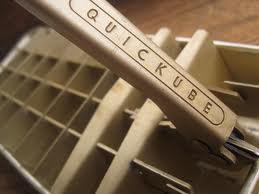
    I remember what they’re for. The ice cube tray made out of aluminum with the lever you pulled that broke the cubes loose, while also breaking half the cubes? I remember that. It was common before we knew that aluminum consumption contributes to Alzheimer’s. I like my ice maker ‘though I’m pretty sure we’ll discover the plastic parts it’s made of cause erectile dysfunction.

    I remember flash cubes, Captain Kangaroo, Mister Ed, and cassette tapes. I know what the relationship is between the cassette tape and a pencil.

    I am not going to “like” any of these things.

    See, I remember them and some of them even fondly. But my brain still works  the way it’s supposed to work. I can still learn new things. I can still challenge myself. I can still be part of the world evolving around me.

    My dad can’t. For brevity’s sake, let’s just say his brain is clogged with knots of protein. His cognitive function is so impaired he makes things up. He’s paranoid. He can’t remember my mother is dead, so he confuses other people with my mom and insists she’s ignoring him. I have had to tell him she’s dead three times in the last month.

    So, I won’t be “liking” anything from my childhood. It’s not that I don’t smile when I remember them, but when I’m 80, I’d like to have someone post a picture of Katy Perry that I can “like.” Maybe I’ll do it when I come in from a run.

  • Would you go back, Jack, and do it again?

    If Lincoln hadn’t gone to the theater, he would have been run over by a carriage. Or he would have had a heart attack. Or he might have fallen down the White House staircase and broken his neck. Or something like that.

    My husband, a historian, hates speculative chat about history. What difference does it make what might have happened if Lincoln hadn’t gone to the theater? Lincoln went to the theater; he was assassinated. There are no do-overs. Write it in the book and move on.

    But, I want a do-over. Actually, I want more than one do-over; I want a lot of do-overs. As my daughter might say, even, I want a lot, a lot, a lot of do-overs.

    I’d use a bunch of them this morning. First, I’d do-over my dental situation. I’ve got dental dominoes going on in my mouth. My front crown fell out recently, bringing down with it a whole range of dental woes, from yellowing to molar rot.

    One of the indignities of aging that rarely gets mentioned is teeth. You hear about hot flashes, back pains, creaking joints, heart attacks, weight gain, gray hair, sagging chins, drooping butts. But no one ever told me that I’d be sitting at my computer, flossing while catching up on blog reading, and my tooth would fall out. Just fall out and plink right onto my laptop.

    Certain dental work can be delayed, like repairing molars. Heck, I figured, I’ve got more than one and it’s not like I’m eating caramels every day. Filling the 22 cavities in my 9-year-old daughter’s mouth seemed far more pressing a year ago. So, my molars waited. But a crown. . . now that can’t wait.

    A crown can be a lovely thing and mine served me well. Beneath the crown, though, is a stump that looks like something cooked up by a British Hillbilly dentist on crack. Money be damned, I could not—would not—go around looking like Austin Powers.

    Replacing the crown is going to be far more involved than I suspected. First, the surrounding teeth need to be bleached because I’ve spent years drinking coffee, tea, cola and all the other things that keep me awake for the glory that is my life. Apparently, they don’t make crowns in the yellowish ivory hue my teeth have taken on. So, bleach. Which leads to bleach trays. Which leads to this morning’s appointment.

    Preparing for the dentist required blow-drying my hair. My hair, which I affectionately refer to as “frog fur,” is fine. And flat. So, I bend over and dry it from the roots believing that this will magically make my hair fuller. I bent over, began drying and then screamed with pain as my back fell apart, perhaps in sympathy with my tooth. When the pain subsided, I stood up and decided that a half-head of volume was better than no volume at all.

    With my half-full head and broken back, I hobbled to the hall closet for my purse. No purse. Everywhere in the house? No purse. So much no purse that I decided my purse must have shrunken and was now so small that my dog ate it. Then I decided my children were no longer content to drive me crazy figuratively and had invented a new game: Gaslighting Mommy, which involves hiding things Mommy frequently needs, like glasses, car keys and her wallet. I called around. No purse at Whole Foods. No purse with husband at his office, as if he suddenly decided he needed a lavender and white man-bag. No purse in my son’s or daughter’s rooms, though I was too afraid to move anything for fear something frightening might be under them.

    So, I called the dentist to reschedule my appointment. Then I found the purse. In the garage. I know how it got there; I’m not telling.

    Then the dentist called. They were worried about me. I decided it was nicer to have someone worry about me than to point out that they wouldn’t have been worried if they were checking their messages. We rescheduled.

    Finally, all the drama seeped out of the morning and I got over wanting a do-over. I decided the newly discovered down time would be well spent at the library.

    I wakened the teenager. We drove to the library. On the way, I rear-ended a Jetta.


    Have you ever wanted a do-over? What would you use it on?

    PS. I attempted to download a photo of a lovely woman with terrible teeth to accompany this post. My computer crashed three times.

  • Righting Writing: Stories from Developmental Writing

    Karin Evans, Dr. Evans to her students, is a professor of English and long-time friend. She wrote today’s post, about teaching writing at the college level to students who don’t pass the placement exam for the college’s freshman-level English class. She’s doing such difficult and important work. Need persuading? Try to teach someone to write. Enjoy!

    I teach writing at a two-year college with open enrollment, where many students are placed in “developmental” classes to help them catch up to college level in reading, writing, and and/or math. When I tell people what I teach, they often ask me why students who have graduated high school need to take these extra classes. Here are four stories about why.

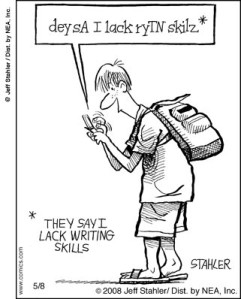
    Matt, who writes like he talks. Matt sits in the back, in the corner, a skinny young guy in a baseball cap. Matt is having a hard time reconciling his own style with how I want him to write his essay. Matt writes extremely casual prose. He writes “alot,” a lot. He never bothers to capitalize the pronoun I. In his concluding paragraph, he uses the phrase “i mean yeah” to create emphasis in the middle of an important run-on sentence. The niceties of Standard English are completely absent from his work. However, he clearly understands the assignment, and the ideas in his draft are completely relevant – it’s a diamond in the rough.

    At the end of the semester, Matt does not pass the exit exam. I am not surprised. I meet with him and we discuss some options, decide that he will take a one-credit class to keep working on his writing style before he tries the placement exam again. I pray that he will meet a creative and flexible instructor for that one-credit class, and that he will have courses in other subjects with manageable writing assignments. Matt’s understanding of what college will ask of him is growing – I hope he can catch on fast enough, that his good attitude and intelligence will be enough to carry him through.

    Jonie, who doesn’t have 100% to give. Jonie is pretty, nicely dressed, and quiet. She is often absent, and often does not submit homework. When she attends, she does well in class – but she does not progress as well as she should be able to. She is elusive; she does not seek help or respond to my comments on her work. After failing the exit exam, she comes to her scheduled conference.

    Sitting in my private office, Jonie confides that she was in a serious car accident the previous year and experiences back pain and neurological problems, including uncontrollable facial and body tics. She has frequent medical appointments. These conditions cause her a great deal of stress, and some days she is simply unable to make herself come to school. Compounding these more unusual problems, she does not have good study habits, struggles to manage her school assignments and deadlines. Jonie tells me candidly that she does not feel she has earned her way into English 1101; she believes she would benefit from repeating the developmental class. I am both impressed and relieved that she has drawn this conclusion for herself. But will she persist, and enroll in the class again? Then will she find the support and motivation she needs to do better the second time?

    Jeremy, a little older and wiser. Jeremy has been a forklift driver, a security guard, a warehouse shift supervisor. Now about 30, he is a husband and a father. His wife has more education – I have a hunch that she latched onto him because she could see how smart he is, how engaged and determined. Jeremy is opinionated and verbose in class discussion. Somehow I am able to help him channel and structure all his ideas and energy in his writing. In one semester, his writing transforms from halting and underdeveloped paragraphs to fairly articulate and detailed essays.

    Jeremy passes the exit exam, as he deserves. The following semester, he stops by to let me know how his English 1101 class is going and to show me a picture of his new daughter. Last week, he emailed me to ask about the required textbook for my online English 1102 class – he’s enrolled.

    Austen, who is really ready to learn. Like many developmental students, Austen attempts the placement test more than once before giving in and enrolling in the course. She writes in an early assignment that she has never done well in English and figures that she’ll be better off if she takes the class. Austen is a teacher’s dream come true – she follows instructions, works really hard on her assignments, takes feedback well, and sets an excellent example for other students.

    Nervous about the placement test, Austen asks me what will happen if she fails. I say we’ll drive off that bridge when we come to it – but I know I am already committed to walking her through an appeal process if it comes to that. Sometimes really good students freeze under pressure. I tell her that as long as she remembers to take her confidence with her, she’ll do fine – and she does.

    You might be asking, did Austen really need that extra class? Maybe, maybe not – but according to her own self-report, she was glad to have the chance to build her confidence before taking English 1101. I’m not worried about whether she will pass English 1101 now, and I hope she’s not either.

    Why do we offer developmental education for students like these in the college setting – why don’t the high schools finish the job? High school is for children, who are subject to their parents and the state. Developmental education belongs in the college setting because the students are adults, and college is where we educate adults. Adults choose and prioritize their own goals, and they figure out how to reach them, or they figure out how to change them. Frequently, people who did not sense any real purpose for their high school education, or whose experience was compromised by abuse, poverty, mental illness, or any number of frightening factors, find themselves ready, in some ways, to approach college. They may be socially and emotionally mature enough, and they may be perfectly intelligent, but their academic skills may be lacking.

    There is no format in the high school setting where adult students can be served. However, colleges – especially community colleges – are well suited to meet the transitional needs of adult students. Our developmental classes are tied into the college curriculum; most faculty also teach college-level courses. Our classrooms are college classrooms. For many students, we offer an essential bridge to the path that leads to a significant goal – a nursing degree, a program in video game development, a certificate in construction management, transferring to a four-year university to study computer science. When we invest in these students, we invest in ourselves. We educate citizens and professionals who will make a difference in the lives of many. In the long run, these are the best investments we can make.

  • C? Si! 100 posts and beyond

    I’m not ordinarily interested in anniversaries, commemorative dates and other forced significancies. I barely remember how long I’ve been married and don’t really think it matters much. Frankly, staying married is really just a matter of not getting divorced when things get bad. Things have always gotten better for us, so being married for 20 years is more luck than hard work.

    I don’t understand why we have to celebrate birthdays, either. I get older every year; so do you. Why do I have to go out to eat somewhere really fancy on April 22? Maybe I’d like to go out to eat somewhere really fancy on June 26 or October 13. I’m considering putting tokens in a jar for all of the events we’re supposed to commemorate. Then, if we feel like doing it up one day, we can just take out a token and celebrate whatever we happen to pull out. So, if I want to, I can celebrate my October wedding anniversary in March.

    Publishing 100 posts on Snide Reply, though, is apparently something to crow about. I’ve actually published 101, but I didn’t write one of them. I recently re-blogged a post from sweetmotherlover, a blogger I follow. Because I’m busier than a suburban mom driving her kids all over town to various summer activites, I decided to break my no-commemorations rule. I am celebrating writing 100 posts by re-blogging the first post I wrote, two years ago. Back then, I had about 35 followers. Last time I checked, I had about 144145147. Not the biggest following, but more than I ever thought I’d reach. I happen to think my first is also one of my funniest posts and hope you think so, too. Enjoy.

    Thanks friends, family and followers! I’ll keep writing if you’ll keep following.

  • Tears On My Pillow

    One look at him and I knew he wasn’t done. Brow furrowed, mouth turned down, eyes wide, he was half an inch from starting up again and I had no idea how to stop him. Then the tears started.

    “Why are you crying?” I asked as gently as possible.

    “Because of the lump in my froat,” he said, still too young to get the “th” sound right.

    “The lump is in your throat because you’re crying,” I said. “So, why are you crying?”

    “Because of the lump,” he said. I sighed. The physiology behind tear production apparently isn’t part of the public school kindergarten curriculum.

    “Well, when we are sad, we cry and the lump means that you are thinking about something sad and then you cry because of the sad thing, not because of the lump,” I explained. Then, he cried in earnest.

    “Why are you sad?” I asked.

    He cried.

    “Are you thinking about mommy?” I asked.

    He cried harder. Ah, I thought, something to work with.

    “Well, stop thinking about mommy,” I said.

    The crying paused, as he considered whether it were truly possible to stop thinking about mommy when he was sure that mommy had abandoned him at math enrichment class. He began to cry again.

    “Think about math,” I said. Well, I thought, that was the lamest thing you could have said. Sensing the lameness of my advice, he continued crying.

    “Wait! Wait!” I said. “I have an idea! Let’s try this!” He paused.

    “Take a deep breath and pretend you’re smelling a big bunch of flowers.” He inhaled.

    “Now, blow it out and pretend you’re blowing out the candles on a cake.” He exhaled.

    We inhaled and exhaled for a while ‘til he calmed enough to think about math. We got through the lesson. He never knew I learned “smell the flowers, blow out the candles” while helping care for my own mother, who died of emphysema.

    I didn’t cry for my mother in public other than those dainty little trails so insignificant that they barely need to be wiped away. I remember holding my daughter’s hand as we walked down the aisle behind my mother’s casket. I spied a friend in a pew toward the front. Tears came to my eyes. I took a deep breath and closed my eyes until the tears passed, not in time to keep one from trickling down my cheek but before my mascara suffered any damage. My mother would have approved.

    I’d like to tell you that my aversion to public crying is based on aesthetics. Runny, ruddy noses and red-rimmed eyes are unattractive at best. But I know that I really do think crying is for sissies and I am no sissy. No, I don’t think this is a particularly healthy stance, but it’s the one I’ve got. And, yes, I do know that big girls, and big men, do cry.

    It’s not that I don’t feel like crying. I feel like crying so often I might be able to cry a river. Between hormone fluctuations and bipolar disorder, my brain chemistry is pretty much primed to turn any amount of pathos into a bawl. Remember that Coke

    (ok, so it was Pepsi) commercial with the little boy being pounced on by a pack of puppies? Had me in tears every time I saw it. Now, I’m not talking little sniffles. I’m talking about tears that lasted way past the commercial break. That Procter and Gamble spot with all the moms dragging their sleepy kids out of bed so they (the kids, that is) can become Olympic athletes? Wrings sobs from me. Is it no wonder I’ve trained my tears to stop on command?

    My kids, particularly my daughter, have picked up on my propensity for becoming maudlin over recorded fare ranging from the sentimental to the insipid. We’ll be watching a movie, say We Bought A Zoo, and everything will be going along swimmingly until the dad-figure and the son-figure have a touching moment that begins to heal the rift they’ve felt between them since the mom-figure died. Only seconds after my eyes begin to fill up, my daughter says, “You’re crying, aren’t you?” Doesn’t even have to look, she just knows it. My sister suffers the same schmaltz-induced weeping. Her kids are far less kind. “Look!” they say, “Mom’s crying! You’re crying, aren’t you?” I believe I’ve seen my sister stick her tongue out at them.

    My daughter may have taken a page from my niece and nephews. Recently, she and a friend were cleaning up the family room. By that I mean they were listening to music, dancing and performing gymnastics amidst a myriad of books, stuffed animals and craft supplies. A particular Selena Gomez song came on; I’ve written about this song before. My daughter knows it makes me cry. So, in consideration of my tender feelings, she said, “Watch this! This song always makes my mom cry. See! There she goes!”

    There, indeed, I did go. My daughter’s friend’s mother apparently does not cry at sappy Selena Gomez songs. Friend looked at me as if I were some exotic creature. “Why does this song make you cry?” she asked, cocking her head to one side like a scientist. I resisted the urge to hand her a clipboard and pencil.

    “Well,” I said, “lots of women have a nasty voice inside their heads that tells them they are ugly or fat or stupid. It makes me sad that I have that voice in my head and I hope my daughter never does.”

    She nodded her head and went back to turning cartwheels. Yes, in fact, I did cry writing that last paragraph—in the peace and privacy of my office.

  • It’s All Good

    Brown Sugar Bacon ala katieleehome.comWhen I started blogging, I didn’t read other people’s blogs. I was new; what did I know? Frankly, it never really occurred to me that anyone beyond my immediate family would care what came out of my fingertips, unless it was Dr. Pepper. Quite a few people in my family would be impressed if I could shoot Dr. Pepper out of my fingertips. Or lasers. It’d be pretty cool to shoot lasers out of my fingertips.

    While my list of followers is not that large—I know people who’ve had more guests at their weddings than I have on Snide Reply—it’s far more than my gene pool alone could supply. I learned pretty quickly that you gotta spread the blog love. If you’re writing blogs, then you should be reading them, too. Blogosphere tit-for-tat.

    I discovered that there are certain blog posts that are de rigueur. As I write, I have a headache otherwise I would remember all the different kinds of posts I’m supposed to write. There’s the Search Terms post; that’s the one in which you write about all the crazy search terms people used that brought them to your blog. When I wrote my search terms post, “penis” was in all of the top five terms. Today, I am pleased to report there is not a single “penis” in the top five. Ok, there’s a “dick,” but I’m not counting it. Could be someone is looking for their Uncle Dick, not their uncle’s dick.

    The other kind of post that I can remember is the Goodness Gratefulness Post. I did do a gratitude post some time back; it got Freshly Pressed. But it pretty much thumbed its nose at the idea of being grateful ‘cause, really, must we be grateful all the time? I think not. Still, I’ve been kinda down and thought maybe focusing on what’s good might help. So, here are the things that strike me as good today.

    My son earned a D in American Studies.

    Asian parents abound in our neighborhood; for many of them, the only achievements worth celebrating are As. Then there is my family, whooping it up over our son’s D. We are celebrating the fact that a D is not an F. We are celebrating the fact that our son seems to finally understand that it doesn’t matter if you think your teacher is a douche bag bad teacher nor does it matter if you can get an A on the final without doing the homework.  My husband and I now understand that grounding is far more effective when there is something at stake, like driving around aimlessly with one’s friends.

    There is no wolverine in my garage.

    Garages and basements are the same thing in my mind, except that the garage has immediate access to nature. Creepy, cluttered, spider-ridden, dark and dusty, basements are the stuff of horror shows. Mine would be a blockbuster. But as scary as basements are, they have the advantage of being rather more difficult to infiltrate than, say, a garage. While my garage is no Taj, it would make a commodious abode for any wandering wildlife. So, I always step gingerly into the garage, particularly at night, despite six years of venturing there without incident. I shall remain vigilant. Hell, there’s an opossum living under our deck; why wouldn’t there be a wolverine in the garage?

    Coyote pups are really cute.

    Early in the spring, a coyote crossed my path as I ran through the prairie preserve near my house. Feigning disinterest in devouring me, he stared me down then slunk silently into the reeds ringing the marsh to the north. Feigning nonchalance, I reversed my running course and fled—I mean, jogged calmly away—resisting the urge to run forward while looking back.

    Approximately two months later, a pair of coyote pups crossed my path while running through the same preserve. Looking more like teddy bears than predators, they scurried into the grass at the side of the trail, barely hid their fluffy little faces and watched me jog calmly by. They were gone by the time I had doubled back, headed toward home. Hunting, I supposed. With their dad. Far from me.

    There are lots of baby bunnies this time of year.

    I spied a baby bunny in my yard this morning. He looked so much like the fiend that devoured my roses when we first moved here that I gave an involuntary cringe. I shooed him away, toward the prairie preserve and the darling coyote pups. Hey! Circle of life, people. It’s a bitch.

    There’s bacon in the fridge.

    I have a friend who doesn’t get bacon, as in “Bacon? What’s so special about bacon?” I try to understand her point of view by remembering that she loves beer. Now, I like beer. Lately, I’ve been drinking beer on a semi-regular basis. I even have some in the fridge right now. But I won’t drink just any beer. My dad would drink any beer, especially any cheap beer. My friend and I are far more discriminating. And that’s where the beer and bacon comparison falls apart. There are bad beers. There are spectacularly bad beers. But there is no such thing as bad bacon. There is bacon that is a little too salty, or too fatty or not cooked exactly the way you like it. But it’s all bacon and it’s all good.

  • I’ll meet you on the dark side of the mom

    My children have their last day of school tomorrow. Technically, it’s really just their last hour of school before summer break. The school district is calling that hour a half-day; I can’t help but wonder why we wonder that our children have a hard time with math.

    My kids will be home all day for 83 days minus one hour. We’ll reconnect. We’ll sleep late, go to the beach, make cookies, go out for lunch, run through the sprinkler, watch movies, go to the library. By then, we will have made it to about day six. And then I will want them the hell out of my hair.

    I realize it’s not very mom-like to dread spending large amounts of time with your children. I realized this when I admitted that I could quite easily spend six weeks away from my kids without really missing them that much. I assumed that the six weeks would be spent doing things like, I don’t know, a writer’s retreat or teaching English in France or writing and reading on a beach in France. Whatever it was, it involved France. Further, I assumed there would be telephones and computers with Internet connections, probably even Wi-Fi, because—again, making an assumption—I figured that they have advanced technology in France. So, I could write and read on a beach in France and my kids could text me. We might even be able to Skype.

    But I was reviled. The other mothers pounced on my uncaring attitude toward my offspring. How on earth, they thought, could I be separated from my kiddies for so long?  Apparently, these moms assumed they would spend the six weeks in a sensory deprivation tank. And that their partners would cease to exist or would instantly become insensible, incompetent boobs completely incapable of caring for children.

    Admitting to being cool with a six-week vacation wasn’t the first time I realized there’s a dark side to this mom. That happened about two months after my son was born.

    I remember falling in love with my son. Not loving him, but falling in love with him. Smelling the top of his head and swooning. Taking pictures of his tiny toes and the soft fuzzy back of his neck, then kissing both. I was smitten. At the same time, I sometimes had an almost overwhelming desire to spike him like a football in the end zone. What kind of mother fantasizes about slamming her baby into the Astroturf, I thought? A bad one, came the answer. A really, really bad one who should have her child immediately removed from her custody.

    “This is completely normal,” said my therapist, admitting that while her fantasies were much less violent—she was just going to open her arms and let the baby fall to his fate—they existed nonetheless. Great, I thought, I’ve got a really, really bad mom for a therapist and her child should immediately be removed from her custody.

    My therapist also thought it was completely normal when I admitted later that I loved IKEA because I could shop in the calming comfort of cheap Swedish design while someone else watched my kid. I even admitted that, gliding down the escalator, I thought, “I could walk out the door, get in my car and drive away. I could be a long, long way away before anyone even noticed.”

    Eventually, I accepted the balderdash my therapist was feeding me: that good moms have deep dark fantasies involving their children. Just because other moms weren’t admitting it didn’t make it any less true.

    I didn’t spike my son nor did I leave him at IKEA. He’s sixteen now and still living with us. We even had another kid. Though I have never fantasized about spiking her, I still have my dark moments.

    My daughter cries about every little hurt, bump, or scratch she gets. She also cries when she makes a mistake or has an accident. Now, I’m not talking tears spilling gracefully from her cheeks. The biggest—and most racist—misconception about Chinese girls is that they are all delicate, quiet and well behaved. You know, that “uh, uh, uh, oh-oh, Little China Girl” thing.

    There are no dainty trails of tears from my daughter; there is wailing, sobbing, whining and lamentation. It drives me crazy. It makes me want to smack her. It makes me clap my hands over my ears. I know these are inappropriate responses, so I calmly tell her I can’t understand her when she cries. She cries more because now she is not just in pain, but also misunderstood. I tell her I need her to stop crying. Now she is crying harder because she’s making mommy mad. I tell her she has to the count of five to stop crying. Now she is crying even harder because she’s being timed. I get to five and tell her I’m going to start charging her a quarter for every minute she cries. All the while, my inside my head voice is screaming “Suck it up, you little baby!”

    My husband admits that he has had dark fantasies, particularly involving our son. Our son is not a demon though some have thought so. He has always been difficult and my husband came to parenting late. So, who could blame him when he screamed at his mother that at least he wasn’t “out whoring and drinking” when she mentioned how he might improve his fathering techniques.

    Our daughter appears to have cured my husband of his darkest fantasies. Now he’ll more likely fall into despondency over his failures as a father. He does sometimes fantasize about driving away and not telling anyone where he’s gone. He admitted, though, that he’d just go to a hotel for the night and watch old movies in peace.

    I realize I’m not painting a very loving picture of myself, but being honest about my darkest thoughts helps take away their power. There are days when going to the beach with my kids is exactly what I want to do. Then there are days when I’d rather clean the cat boxes. So, I’ll suck it up for the summer. The first day of school, though, I’m headed for France, at least in my fantasies.

  • Battle Hymn of the Pussy Mom

    In my continuing effort to assess the parenting book competition, I recently read “Battle Hymn of the Tiger Mother.” Lots and lots of people read the book; lots and lots of people thought the author, Amy Chua, a monster for how she treated her children. I’ll confess that I had an ulterior motive in reading the book, though. As the white European-extracted mother of a Chinese girl, I’ve been conflicted about how to raise her since the day I first bounced her on my hip. Maybe, I thought, I can learn something about raising a Chinese daughter from a Chinese mother.

    Not that conflicted feelings about motherhood are something new. Second Guessing is the dirty little secret of every mother I know, right up there with buying print blouses not because they are pretty but because they can hide a boatload of baby spit up.

    For me, Second Guessing started with giving my son his first bottle of formula. I remember filling the bottle, breast-feeding failure seeping out of me. The stuff smelled vile. How, I thought, could I feed this poisonous brew to my boy? What about his immunities? What about his IQ? Never mind his “failure to thrive,” which was obviously the fault of my faulty boobs, what about my mom cred? The little heathen sucked the stuff down like an alcoholic after a three-week dry out. Now, he’s seldom sick and his IQ is just fine, but I still feel like Bad Mommy every time I see a successful breast-feeder and her chubby offspring.

    Bad Mommy still visits. Hell, I see her more often than I see my husband. She’s particularly active, where my daughter is concerned, around Chinese New Year. My husband and I have managed to cobble together a family life that incorporates his Jewish-ness, my Catholic background and a little sprinkling of Buddhism for flavor. We celebrate Passover using a haggadah we wrote ourselves that mashes together e e cummings, socialism and the traditional Passover stories. We have a Christmas tree that has some Chinese ornaments and Stars of David scattered among the bells, Santas and South Park characters. A statue of Buddha is the first thing you see when you enter our home. Well, that and a pile of shoes and backpacks.

    But Chinese New Year? From an auspicious beginning of a party with like-constructed families, complete with dragon dance, we’ve devolved into dinner at a local Chinese restaurant. Sure, the kids get some money presented in a red envelope and I hang a string of fake firecrackers on the front door for ten days, but I’ll be the first to admit that our Chinese New Year celebration is pretty hollow.

    Maybe, I thought, it’s pointless to try to celebrate holidays that I’m only familiar with through what I read on the Internet. We’ll go to Chinatown. We’ll watch the parade. We’ll go to that big, expensive banquet the Families with Children from China puts on every year. I made all these virtual plans forgetting that Chinese New Year takes place in winter and we have no money. It’s freaking cold in winter in Chicago. We’re broke. Hello, Square One.

    Taking a different tack was easier once we moved to Naperville. One reason I chose this suburb is the concentration of Asians, Chinese in particular, who live here. The only area with more Chinese than Naperville is Chinatown. Since we came here for the schools and our son isn’t Chinese, we decided Naperville was the better option, though it still feels pretty foreign.

    What I immediately learned on moving here is that celebrating Chinese New Year and eating Chinese take out every six months aren’t the essence of growing up Chinese. No, if my daughter was to truly feel Chinese, she’d need some Chinese parenting.

    Chinese parenting, as I learned from my neighbors and Ms. Chua, is as exotic—and distasteful—to American sensibilities as thousand-year-old eggs.

    When she was three years old, my daughter became fast friends with a Chinese girl being raised by Chinese people. My daughter’s friend took piano, dance, gymnastics and pottery classes. All day on Saturday, she attended Chinese school. My daughter took piano.  She practiced about 15 minutes each day, per my mother the piano teacher’s instruction. My daughter’s friend practiced 45 minutes each day; she was four at the time. Chinese Friend’s father, on hearing that I intended to let my daughter enjoy playing the piano and grow into a more ambitious practice schedule, said, “By then it will be too late.” He never explained what it would be too late for, but I left with the distinct feeling that I’d been Chinese parented. Bad Mommy kicked my shameful butt all the way home.

    While Chinese Friend’s parents had nowhere near the ferocity of Tiger Mother Chua, they all had the same approach to parenting. Pushing a child to excel, accepting nothing but perfection and perfect obedience, creates successful adults. Failure is simply not tolerated. In contrast, my own parenting skills were downright destructive, guaranteed to produce complacent slackers and, eventually, the downfall of American society.

    So, I pulled up my Tiger Mother undies and got to work. As it happens, I teach enrichment in math and English to a population of largely Asian children. I enrolled my daughter in the math program. We doubled her gymnastics lessons to twice per week. We grounded our son forever or until he is no longer failing American Studies, whichever comes first.

    The result? My daughter whines about how hard her math enrichment homework is. We blow off the mid-week gymnastics lesson on a semi-regular basis. My son is home all the time, constantly complaining of boredom and boredom-induced hunger.

    I am a failure at Tiger parenting. I am a pussy parent. I let my kids play when they might be practicing an instrument or completing extra credit. They have computers in their bedrooms. They go on sleepovers and have play dates. My son has had two girlfriends.

    I wish I had the Tiger Mother’s selfless ability to let her kids dislike her. I’m going to have to be okay with my pussy parenting, though. My daughter makes straight As without prompting and according to Amy, only the piano and violin are appropriate instruments. My son plays the drums, guitar and can still fiddle around with a cello. So, while Amy’s daughters are studying into the night at Harvard, they’ll be listening to my son, the rock star, on their radios.


    I know I have readers from all over the world. Tell me: are you a tiger or a pussy? What’s the prevailing approach where you live?

  • Does Motherhood Suck? Depends!

    When I had younger kids, I read a lot of parenting books. I stopped reading them when I realized the only helpful advice I’d gleaned was that children meltdown when they are with you because they feel safe. Knowing my excellent parenting skills led to behavior my kids wouldn’t inflict on strangers was cold comfort. So I started reading vampire books. Somehow, it just felt right to read about being literally sucked dry at a time when my children were figuratively sucking me dry.

    It wasn’t until recently that I started reading parenting books again. Ok, it was yesterday. I’ve been noodling with the idea of writing a parenting book so decided to check out the competition. I wasn’t able to check out all of the most recent tomes; I had to put Bringing Up Bébé on hold. But I grabbed I Was A Really Good Mom Before I Had Kids and Battle Hymn of the Tiger Mother.

    I thought I’d start with I Was A Really Good Mom. Brief synopsis: Trisha Ashworth and Amy Nobile, two new moms, discovered that mothering is really hard. They decided that no one was talking about how hard mothering is so they took it upon themselves to “talk to more than 100 mothers” about how hard mothering is.

    And what did those moms say? That they were shocked to learn how hard mothering is. One said, “I thought having a baby would be like having a pet—oh, this will be cute. We’ll be this happy little family.” I’ll wait while you say, “Oh, my god! You’re freaking kidding me.”

    Done? Ok, now it’s pretty obvious to me that that mom never had a pet because anyone who has ever had a pet knows they can be as challenging as children. Of course, you don’t have to send your dog to college, but your child will eventually learn to stop peeing in the wrong places.

    “Babies are just human pets” was not the most unbelievable thing I read in I Was A Really Good Mom. The most unbelievable thing I read was the mom who allowed herself to be quoted saying, “…there are some days I don’t even have time to pee . . .so I wear Depends.” The woman wears Depends so she doesn’t have to stop running around like a maniac. Now, I don’t know about you, but the minute I started thinking that Depends would make my life easier, my ass would be in therapy not a diaper.

    As astoundingly unbelievable as Depends Mom is, is the fact that Trisha and Amy thought no one was talking about how hard mothering is. Really? Not one person saw their pregnant bodies and said, “Just wait ‘til that little one pops out!” No one rubbed Amy’s tummy uninvited and said “Well, little mommy, life’s about to change for you!” I’m betting Trisha and Amy were so surprised that motherhood is hard not because no one talks about it, but because they weren’t listening.

    Motherhood is freaking hard. Sometimes it’s grindingly boring, sometimes it’s physically grueling, sometimes it’s emotionally draining. Any one with half an ounce of hubris would look at the mothers around them and conclude motherhood is not for the faint. But somehow, Amy and Trish and their interviewees came to the conclusion that their MBAs, former executive positions and generally take-charge personalities would make mincemeat of an undertaking that has laid low many a woman before them.

    I think Amy and Trisha should re-title their book I Was A Really Good Mom When I Was Childless And Self-Absorbed. Then the utter amazement with which they discuss the challenges of modern motherhood—should I hire a soccer tutor? Should we potty-train at two or three—might make sense. And while I agree wholeheartedly with their prescription for a more manageable motherhood, I don’t for a minute believe that someone who wears Depends so she can get more done in a day is really going to chill out and lower her expectations.

    Maybe I’m forgetting my own anxieties over motherhood, but I don’t really think so. Sure, I feel like a failure a lot of the time. My son gets hugely horrible grades in subjects he doesn’t like. My daughter, who weighs 53 pounds at age nine, thinks her legs are fat. My house looks like the Blue Angels did a low fly-by through the living room. My yard has more weeds than, well, than any other lawn on the block. I got involved in the PTA and I’d rather swallow Drano than do it again.

    Just as the times I kick myself are many, the times I pat myself on the back are too few. I’m working, writing, helping take care of my dying father and still managing to keep my children safe and healthy and my husband (mostly) happy. Despite all that, I calmly and successfully handled a teen crisis. I even get out to run at least twice a week.

    Yes, mothering is a fabulous experience and nothing compares to holding a warm, sleepy child in your arms. But a lot of mothering just plain sucks and when it does, a wise mother just sucks it up.

  • Death Becomes Dad

    It’s the middle of the night. My dad is up from his bed, again. He does this every night, getting out of the bed for any of a number of reasons. Sometimes he just needs to pee. Sometimes something about his bed is bothering him.

    “What’s going on, Dad?” I’ll ask. “Nothing,” he says. “I just have to get away from that bad environment.” I have no idea what it is about his bed that makes it a bad environment. It adjusts to make him as comfortable as possible. He can sleep with his head elevated. He can sleep with his feet elevated. He can sleep with his head and feel elevated so much that he’s almost in a fetal position.

    Tonight, though, is different. Tonight, he’s not getting away from something. Tonight, he’s getting ready to go somewhere. He walks into the bathroom and washes his face then carefully combs his hair, the things he does every morning. But it’s 2 a.m., about four hours before he usually does these things. So, I ask, “What’s going on, Dad?”

    “I’m getting ready,” he says.

    “What are you getting ready for, Dad?”

    “A meeting. I’ve got a big meeting with an architect.”

    “Where are you meeting an architect, Dad?”

    “Downtown,” he says, clearly agitated. Of course, the meeting is downtown. He went downtown to his office everyday for years. I should know this, he seems to be saying as he glowers at me. In his world, I’m the delusional one.

    “There’s a meeting tomorrow, Dad. But it’s with your doctor. It’s Sunday, Dad.”

    “Okay,” he says in a tone that indicates what I’ve said is clearly not ok. He throws his hands up in frustration.

    Fast-forward two months. Dad’s in a nursing home now. His cancer is in remission. The medical kick in the teeth, though, is that he’s dying. Somehow, the chemo, the radiation, the nights my sibs and I spent tending him weren’t enough. He has dementia, pneumonia, urinary retention, leaking heart valves. He might as well have the cancer back.

    I know my dad is dying because someone told me. I couldn’t figure this out on my own. That makes me feel stupid. Dying is huge; how can I have missed this? But I am a rational human. When the palliative care professionals tell us that Dad is not likely to get better than he is right now, I believe them.  At least, I believe them enough to tell them I believe them. Then I go home and do what I always do: I google “dying.”

    Of course, the Kubler Ross stuff came up, but that’s not what I needed to know. Anger, denial, bargaining, acceptance. Yeah, yeah, yeah. I get it. I know where the anger is going: straight to my husband who gets to deal with me railing against whatever I am railing against at the moment. It’s never that my dad is dying. People die. Getting mad about Dad dying seems ridiculous; getting mad because my son did something bone-headed and my husband let him get away with it makes perfect sense.

    I’m down with the denial, too. Dad’s not dying; he’s got pneumonia and he’ll get better. He’s got dementia but at least he thinks I’m my cousin, who has a vague resemblance to me even with that New Jersey accent. His cancer is in remission. It’s a beautiful day. Nobody dies on beautiful spring days, never mind that Mom died on a beautiful summer day.

    Bargaining? Does promising myself to call more often count? Does taking the kids out of school to visit Grandpa count?

    Acceptance? Getting there . . . and part of getting there is getting to know what it is I’m accepting. Before I was diagnosed with bipolar disorder, I would mysteriously become paralyzingly depressed. Then, just as mysteriously, I would feel better. A lot better. Then, out of the blue, I’d be blue. A diagnosis isn’t a cure, but at least I know what I’m dealing with now. I’m not making it up when I can’t get out of bed. I’m not a stress monkey when I can’t get to sleep. The cycles make sense and the medication makes it easier.

    Getting to know death—at least what constitutes dying—has me ticking off the items on the Diagnosis: Death checklist.  Eating less. Check. Sleeping more. Check. Seeing friends and family who aren’t there. Check. Pneumonia. Check. Getting ready to go somewhere important. Check.

    I’ve read that many dying people believe there is something very important they must do. Not like, “Oh, I have to apologize to the neighbor for calling him a son of a bitch for years.” Not that kind of thing. Here is how Ulla Mentzel, of A Good Dying, describes it:

    A man who loves to sail might ask us to get the map. The all important map. Don’t you know? It’s in the drawer over there.

    A soccer player might draw a playing field with an arrow pointing outside the field. Getting ready to leave the playing field.

    A farmer might tell you that she has to take the cows into a different field. The one over the hill. It is very important to take them. Soon.

    I’ve said more than once that I’d rather be shot in the head than live the way my father is now. “If I can’t walk, can’t remember who you are, drool, wet my pants, poop in my pants, forget to put on my pants,” I said, “put me out of my misery.”

    I realize I am a coward and I should have known it. I call myself a Buddhist but I don’t meditate regularly and I am frequently not in the moment. Still, I know that dying is part of living. I place flowers on an altar every week or so. They bloom, they fragrance the house. I leave them in the vase. Their petals droop, then fall until there is nothing on the stem but a flower head. I leave them on the altar. Finally, when they are dry, I take them out of the vase. The cleaning lady admires them when they are fresh, then advocates their removal when they die. But I know, now, that they were dying all along.