Author: jmlindy422

  • Boiling Water and Other Premium Adult Skills

    Boiling Water and Other Premium Adult Skills

    My daughter recently declared that I am a “premium adult.” I’m not entirely sure what that means, but I like the sound of it. Apparently, I have skills and knowledge above the beginner level, though I don’t check all the boxes.

    For instance, I don’t have matching towel sets or feel smug about my multiple drawer and cabinet organizers. But I do use cloth napkins, have retirement accounts, keep folders for current and past taxes, and hold strong opinions on the proper way to fold a fitted sheet. Bonus points: I’ve figured out you can make a bed using only flat sheets—it’s easier, and they fit every time. Folding problem solved.

    Premium adults know things newbie adults don’t. My kids were shocked to discover their dishwashers have filters. They were even more shocked (and maybe a little grossed out) to learn those filters need cleaning. They weren’t surprised that I knew this and do it. They haven’t.

    Their questions cover the full spectrum of “How do I adult?”—from choosing a doctor from a vast HMO list to eliminating the lingering cat pee smell left by a roommate. My solutions aren’t always popular. One child had to replace carpet. The other still hasn’t made the doctor’s appointment.

    Some issues are laughable to fellow premium adults. Take boiling water. It sounds foolproof, but it requires surprising amounts of skill, knowledge, and courage. Step one: overcome fear of open flame. Step two: know what size pot to use, how much water to add, how high the flame should be, and what “boiling” actually looks like.

    Sure, you could Google it, but apparently, a lot of people still don’t know. One YouTube tutorial on boiling water has 1.9 million views. Pasta-cooking videos abound, each with its own rules. Mine: add a tablespoon of salt, never oil, and stir to prevent sticking. But why would you when your mother is a premium adult.

    My son calls for cooking help, too—mainly to decipher the sloppy cursive and minimal directions in my family recipe book. My chili recipe lists ingredients but offers only: Brown the meat. Add everything else. Simmer until flavors blend. I’ve also coached him through replacing a water heater, repairing siding, and banishing the infamous cat pee smell.

    I’m not bullet proof, though. Recently, my son had to bow out of a family fun night. We seldom have all four of us in the same location now that the kids have flown the nest. Happily, everyone’s schedule came together so we could celebrate our daughter’s birthday. She requested hot dogs grilled by her brother. He was all on board, then he wasn’t. The night before the celebration, he texted to say he felt sick. By morning, he had fever, aches, congestion—the works.

    While in Meijer with my daughter, I took his call. He listed his symptoms and mentioned his temperature. A few seconds later, my brain caught up, and I texted back my “premium” alarm:

    “That’s a high fever. Take Tylenol or ibuprofen. Call me in 30 minutes. If it’s not down, I’m taking you to the hospital.”

    Thirty minutes later, he replied:

    “Mom, I think you misheard me. It’s 100.4°, not 104°.”

    Side note: My children insist I need hearing aids. I insist they mumble. The ear doctor sided with me—they mumble.

    To my credit, 104° is an emergency. 100.4° barely registers. It’s a “why are you even calling me?” temperature. But I know why he was calling.

    When you’re sick, you miss your mom—premium or not.

  • I’d Rather Be Bipolar

    I’d Rather Be Bipolar

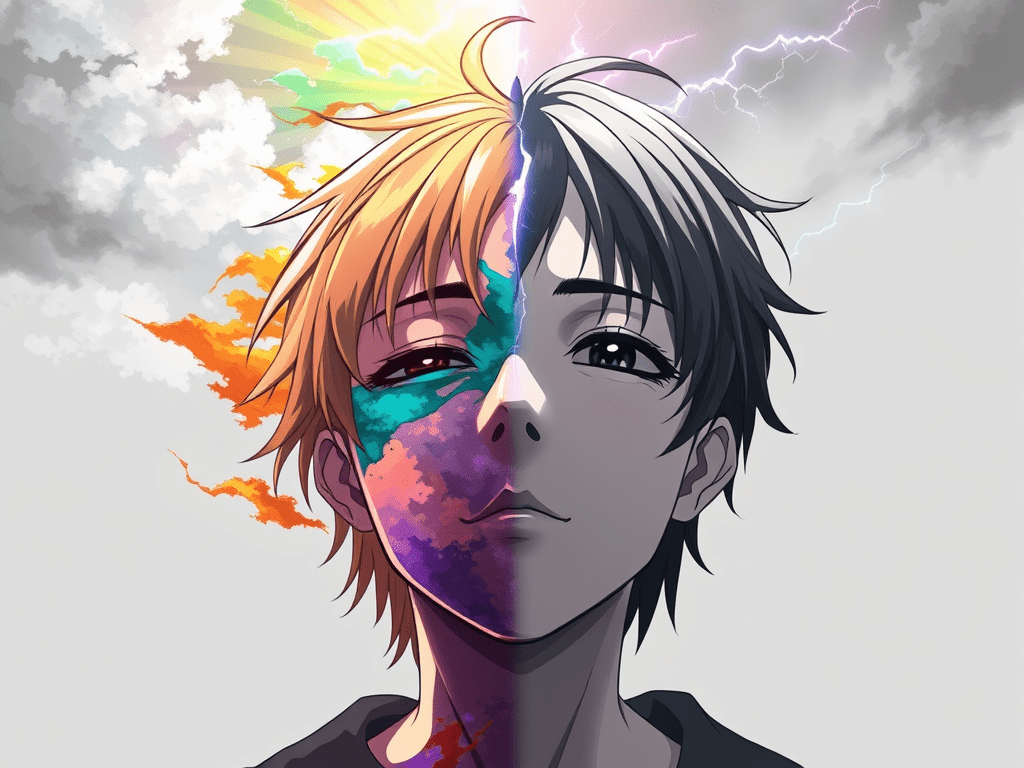
    Mental disorders are common on my mother’s side of the family—schizophrenia, panic, anxiety, and substance use disorders. No one on my father’s side was officially diagnosed, but there was certainly alcoholism and likely depression. I’ve got the DNA to support my bipolar disorder diagnosis.

    In my own family, we deal with anxiety and depression, as well as a host of other conditions: ADHD, OCD, and PTSD. Some are surely genetic; others stem from childhood trauma.

    Knowing what I do, I’d rather be bipolar.

    Schizophrenia brings voices, delusions, and hallucinations into your life.

    Bipolar disorder can also bring delusions and episodes of invincibility—but I’ve never been convinced I was being followed by demons whispering abusive, demeaning comments to me.

    I’ve panicked—real panic—not the kind you feel when you think you left your phone in the Meijer parking lot. But I’ve never been unable to attend school because I forgot the rings I planned to wear that day.

    I’ve seen a student assign colors to subjects, requiring a perfectly matched set of folders, notebooks, and highlighters for each—thanks to OCD. Of course, one subject can’t possibly borrow supplies from another.

    I’ve seen ADHD make reading nearly impossible.

    I’ve also been deeply depressed. In fact, I was initially diagnosed with Major Depressive Disorder. That’s a common misdiagnosis for those of us with bipolar disorder. After all, mania and hypomania can feel good. Who would want that to end? But it does. Depression always follows—and that’s when we seek help. If you can ride it out, the depression eventually lifts. Regular depression often doesn’t.

    So yes, I’d rather be bipolar.

    Recently, I commented on a YouTube short about how to respond to people who make sarcastic remarks. Frankly, I thought the expert advice was off target—suggestions like, “Would you like to repeat that?” or “How would you like me to respond to that?” Talk about snark!

    I replied that I have bipolar disorder and often make snide remarks myself. Another commenter responded by saying she felt sorry for me, that bipolar disorder is terrible.

    I’m sure she meant well.

    But there are worse things in life than being bipolar.

    What’s your experience with mental health labels or misdiagnoses? Whether you’re living it, supporting someone, or simply curious—I’d love to know how mental health challenges affect you. Leave a comment below or share this with someone who might need it. And if this post resonated with you, consider subscribing for more personal reflections on mental health and society.

  • The Signs of Success

    The Signs of Success

    The street I live on is lined with black and gold signs—the school colors of the nearby high school—displayed proudly in front of homes with graduating seniors.

    Beyond graduation announcements, several signs highlight the next educational step:

    Kids heading to DePaul, Northwestern, University of Illinois, and a handful of other Big Ten universities.

    The most coveted names—Harvard, Yale, University of Chicago—pop up now and then.

    It’s the season of pride—pride in someone else’s accomplishments: our children’s.

    What you don’t see:

    “College of DuPage Bound” signs.

    Attending community college, while financially wise, doesn’t seem sign-worthy.

    Facebook Feeds of Pride

    Facebook is even more saturated with parental pride.

    I don’t use it as much these days. Instead of seeing updates from my friends, I was seeing what their kids were doing—and they were all succeeding in the ways society measures success.

    Of course, parents should be proud of their children.

    But all this pride production comes at a steep cost.

    Success Beyond the Signs

    My kids are amazing—though neither of them went to Brown.

    They’ve achieved things that largely go unnoticed.

    High school wasn’t hard for my son.

    But academic success was—thanks in large part to ADHD.

    He could match the top students on tests, but couldn’t remember to bring home, do, return, or turn in assignments.

    His behavior, not his intelligence, kept him from being recognized.

    He’s a talented musician, too—drums at age three, later guitar and bass.

    But his school had few opportunities for someone whose music fits better in a mosh pit than a music hall.

    Following high school, he found a job where his inability to sit still was an advantage. He worked hard and was able to buy a house in his twenties. Not a condo—a drummer needs a basement, after all.

    My Daughter: Persistence Grapples With Emotional Health

    My daughter’s achievements are equally impressive.

    She was driven from the start. I remember one day in grade school:

    “I failed, Mom,” she said.

    I was surprised—she never failed anything in school. I asked about her grade.

    “I failed,” she repeated.

    “It doesn’t matter! I failed!”

    Then it dawned on me.

    “Honey, did you fail—or did you fail to get the grade you wanted?” She nodded. I asked what grade she had received, expecting a B, maybe a C.

    “I got an A,” she cried.

    “What on earth grade did you want?” I practically shouted.

    “I wanted an A+,” she wailed.“I failed, Mom,” she said, visibly upset.

    But high school hit differently.

    She took honors English and Social Studies. She was on the accelerated math track, and a cheerleader.

    Her days were packed—practice, dinner, then homework until she fell asleep with her head on her book, then woke to finish at 2 a.m.

    By sophomore year, she broke—physically and mentally.

    School attendance became impossible. Then, everything but sleep became impossible.

    Eventually, with an IEP and a transfer to virtual school, she graduated.

    Despite dealing with anxiety disorder, OCD, and major depressive disorder, she persevered.

    She’s been working since 16, is now 22, and already planning her retirement with a financial advisor.

    What Gets Recognition?

    I pass by my kids’ old high school every day on my way to work.

    The sign out front rotates between celebrating the school’s state ranking and its students’ academic and athletic successes.

    At the schools where I teach robotics and STEM, the cultural and economic realities are vastly different—but the emphasis on achievement is just as strong.

    Test scores are posted on bulletin boards—but only the high ones.

    Perfect attendance gets stars. A single sick day makes perfection impossible.

    Rethinking What We Celebrate

    Achievement is deeply personal, yet we’ve made it a universal, quantifiable metric:

    • Get A’s
    • Win awards
    • Come in first
    • Earn scholarships
    • Get into “the best” college

    But what if we celebrated something else?

    I’m not talking about the “everyone is a winner” trophy—students know that’s a crock.

    They know what gets real recognition.

    It’s not that they aren’t achieving amazing things.

    It’s that the amazing things they do aren’t the ones we put on signs.

  • Old People Know Things, Too

    Old People Know Things, Too

    I retired from full-time work in 2024. At that time, I was one of the oldest people employed by the organization. I didn’t want to retire, but things transpired as things do, and I stopped working full-time.

    Of course, I used numerous technologies throughout my career—Microsoft Word, Excel, PowerPoint, Teams, Outlook, and more. I’m familiar enough with them to appreciate Masood Boomgaard’s “F*** PowerPoint” video. In my current part-time job, I take attendance and enter my timesheets using apps on my phone.

    I’ve also used technology extensively in my personal life. I bought my first computer—a Mac Plus with a whopping 1 megabyte of RAM—in 1989. Now, there are more Apple devices in my home than there are people. Most of the legacy Macs are laptops, but there’s also an iPod or two, as well as a few iPads past their prime. Everything still works.

    Devices currently in use include two MacBook Airs, two iPhones, and a new iPad—a replacement for the last one, which was itself a replacement for the first. The newest iPad is huge compared to the rest—my only concession to needing a bigger, easier-to-read screen.

    I do everything on my devices. All my banking is online; I don’t even remember the last time I wrote a check. If I need one, I borrow one from my husband. I use Excel to comparison-shop everything from kitchen remodeling to deciding which Medicare supplement plan to buy.

    News? I get it online.

    Email? Available on my iPhone, Mac, and iPad.

    YouTube? iPhone, iPad, and Fire TV.

    Front door lock? Biometric.

    Doorbell? Has a camera.

    Furnace? I can change the temperature without getting out of bed.

    Driving? GPS, of course.

    But I don’t stop at the typical uses.

    Knitting? Knit Companion on the iPad.

    Home cleaning? Home Routines.

    Motivation? Finch.

    House training the dog? Puddle and Pile.

    If there’s an app for it, I’m on it.

    Many folks younger than me—especially Millennials and Zoomers—refuse to believe anyone born before them can use contemporary technology.

    It’s really starting to piss me off.

    Recently, I needed to enter a verification code that was texted to my iPhone. As I was about to automatically enter the code (a very nice feature, IMHO), a younger person leaned over my shoulder to show me how to do what I was just about to do. I, perhaps a little too snippily, said, “I know,” and let the phone do its thing.

    Because said person routinely shows her mother how to use technology, she assumed I would need a personal IT manager as well.

    It’s almost comically common for those younger than Boomers to believe we’re technological dinosaurs without the desire or mental capacity to learn anything—anything—new. There’s a witty Boomer response: I taught you how to use a spoon.

    The idea that Boomers are stupid, lazy, and proud of our lack of tech savvy simply isn’t true. We use smartphones, stream entertainment, shop and bank online, brag about our kids on Facebook, and catch up on the news. Some of us even know how to get our stupid routers to stop acting stupid. Most of us rely on technology to the point that we panic when the internet goes down.

    I was born before personal computers were a thing. I learned to write with a crayon. I graduated to pencils and pens by middle school and learned to type on a manual typewriter in high school. My secret crush is the IBM Selectric. IYKYK.

    In college, I wrote papers on a word-processing typewriter; the screen previewed about half a sentence at a time before the letters were typed onto the paper.

    I encountered business computing in a form my kids would recognize early in my career. Email, word processing, databases, and financial software were accessed through a terminal.

    The equipment and applications became more advanced as the years went on. Currently, I’m writing this post at my dining room table on a MacBook Air with a modest 8 GB of RAM. My iPhone and iPad are across the room. Everything is connected to 5G Wi-Fi. Clearly, this old person can use technology—despite being born when engineers used slide rules.

    Whippersnappers boast that they’re good at technology because they were born using it. Consider, though, that many haven’t upgraded their skills as each app iteration is released—they haven’t had to. At this point, nothing is new to them; it’s just improved.

    Boomers have been learning and adapting to technological change since childhood. Sure, by the time we reach our 50s, we may be a little tired of having to adapt—but we do it. We do it to stay current, to avoid becoming the dinosaurs we’re accused of being. Put that in your latte and drink it, Millennial.

    I taught my children much more than how to use a spoon. They cook (well, one of them does), clean, say please and thank you, know how to fold a fitted sheet (though they don’t do it), and only say “Can I go with?” to annoy me. They still call me when they don’t know how to do something, including deciphering the secret Boomer code (aka cursive) I use to write down recipes.

    If I know any actual Technological Boomer Dinosaurs, it’s my husband. He thinks technology hates him and only him. In his defense, he was born at the beginning of our cohort; I was born twelve years later—enough to make us seem like we’re from different generations. His rock stars were The Beatles; mine were Jimmy Page and Robert Plant.

    Recently, though, he started reviewing every movie ever made (or something like that—it’s a lot of movies) and publishing them on Substack. Without assistance. This morning, we had a conversation about open rates and views.

    Thanks to Mike Kalecki for this post’s title.

    Copyright Janice M. Lindegard

  • A Hopeless Case

    A Hopeless Case

    My sister asked me recently if I felt hopeless. Ordinarily, when she calls, she leads with “Hi.” But we’d been talking about aging and my attitude toward my own life, so “Do you feel hopeless about life?” wasn’t entirely out of left field.

    “No,” I said. “I feel okay.”

    “Right!” she said, and I knew we weren’t talking about me—or just me.

    A friend of hers had asked, “How are you?” My sister, who is genuinely doing well right now, responded with something like, “Good. How are you?” You know, the typical American response—sometimes not quite the truth, but given out of habit because you don’t feel like being honest, and no one expects you to be anyway.

    Of course, my sister asked the obligatory “How are you?” in return. But her friend was honest; she felt hopeless about the world and carried herself like someone who had lost hope. This immediately made my sister feel like a shallow asshole. She definitely said shallow; I don’t remember if she said asshole.

    The Americans I know and spend time with—even the Republicans—have frequently felt hopeless since January 20. I assume my readers are also news readers, or at least news followers. I’m pretty sure my son and his friends get their news from alternative media—i.e., not The New York Times, the Associated Press, or, God forbid, The Atlantic.

    No matter the source, every day brings some new horror; some days, there are multiple horrors. We aren’t even 100 days into the latest Trump administration, and our country has managed to alienate nearly every ally while cozying up to a notorious dictator and enemy.

    Overnight—at least it feels like overnight—America has gone from being the big, slightly naïve friend you could count on in a tight spot to the big, dumb bully on the playground.

    Hard to believe, but as terrible as the United States is to its neighbors, it is even more terrible to its own citizens and visitors, and worse still to the nation’s Constitution.

    The fundamental rights of American society are established in our First Amendment—an amendment even more sacred than the Second, which is regularly defended with near religious fervor.

    The First Amendment reads:

    Congress shall make no law respecting an establishment of religion, or prohibiting the free exercise thereof; or abridging the freedom of speech, or of the press; or the right of the people peaceably to assemble, and to petition the Government for a redress of grievances.

    These rights are protected regardless of citizenship status. You can’t be arrested for attending a rally or holding an opinion, so long as you don’t incite a riot. Unless you’re Donald Trump. You can’t prohibit a news outlet from reporting on the government. Unless you’re Donald Trump. You can’t fire entire teams of people without cause. Unless you’re Donald Trump—or his henchman, Elon Musk.

    (Side note: Musk’s son recently told Donald that he, Donald, “isn’t really the President.” Precocious or coached?)

    And our elected Congress does, quite literally, nothing.

    Republicans are gleeful that, as repugnant as he is and as unhinged as he seems, Donald Trump is the perfect fall guy to help them accomplish their long-held conservative government agenda. Many of his supporters think he’s doing a great job—until grants that benefit them, grants that have already been approved by Congress, are suddenly canceled. Or until another social safety net crucial to their communities is put on the chopping block.

    Democrats, meanwhile, are weak-willed, especially those in power. Despite Democratic voter anger, they cave, clinging to some naive hope of bipartisan cooperation.

    And there’s that word again—hope. When the first four rights of the First Amendment have fallen, all hope rests on the last: the right of the people to petition the Government for a redress of grievances.

    I’ve heard that a three-legged stool is the most stable. The United States is teetering on its last leg—the Supreme Court, which Republicans finagled into a conservative majority. Perhaps foolishly, I have some faith in the Court’s ability to recognize the many egregious affronts to the fundamental rights of those in the United States as unconstitutional.

    So no, I am not hopeless. Are you?

  • A Wild Ride Through a Bipolar Mind

    A Wild Ride Through a Bipolar Mind

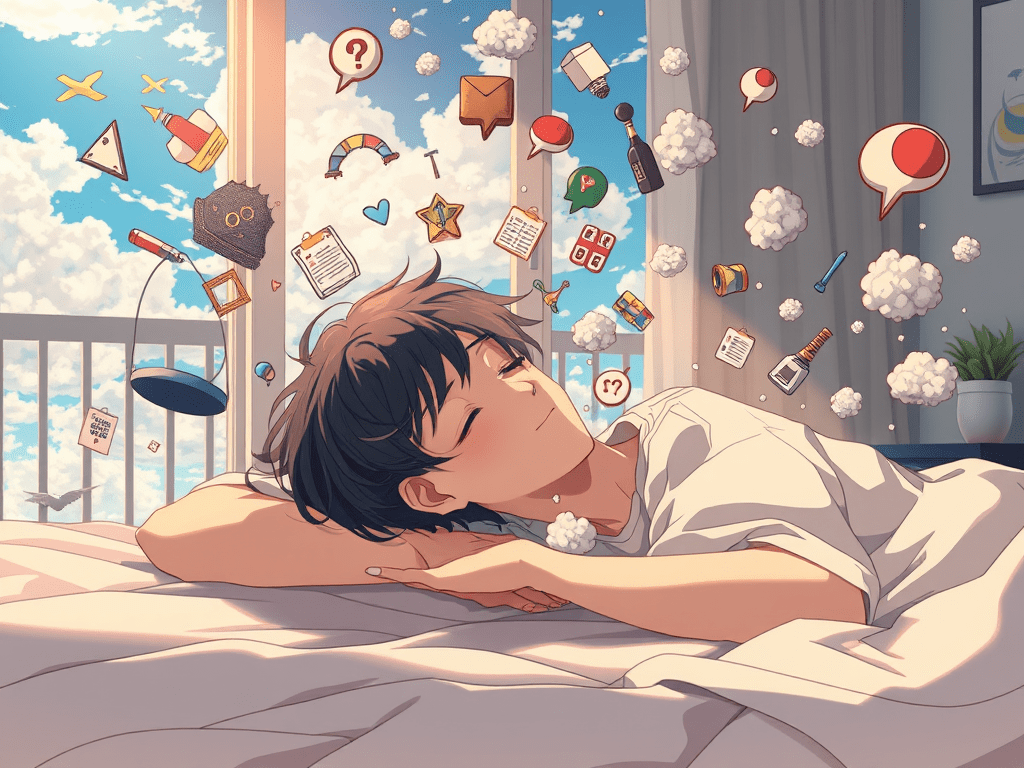
    I’m lying in bed, having just woken from a nap. It’s afternoon, and I have a modestly expansive view of the outdoors through the sliding glass door to the balcony. That sounds grand but trust me—it owes more to the trailer park than Gosford Park.

    The sky is early-spring blue, and a typical Midwestern breeze blows—stronger than you’d like, but warm enough that you’ll take it. Fluffy white clouds drift by, placid and classic.

    I look equally placid. My brain, however, is not. I am bipolar; my brain knows only two speeds—light and sleep. Now, it’s spinning almost out of control, leaping from one thought to the next.

    Instead of pondering the shapes of the clouds—though one looked distinctly like a fat, ugly swan—I was thinking about adoption. Specifically, about how it’s often presented as a simple solution for building a family when all else fails.

    I’ve often heard, “Don’t worry. You can adopt,” as if adopting is like applying to college. “Don’t worry. If you don’t get into Harvard, you can always go to the College of DuPage.” I’ve adopted. It’s more like, “Don’t worry. If you don’t get into Harvard, you can just go to Yale.”

    My mind hopped from adoption to the increase in infants born in the United States due to abortion bans. That led directly to Donald Trump’s treatment of Volodymyr Zelensky. This makes sense if you make the mental leaps typical of a bipolar mind. Less so if you’re neurotypical.

    Back to Trump, Vance, and Zelensky. It was disgusting to watch the Dracula of U.S. presidents and his sidekick, J.D. Renfield, belittle the leader of another country—an ally. I wanted to be a fly on the wall when Putin reveals what he really thinks of Trump.

    From Trump, I jumped to free speech. Probably not too surprising a leap. Paranoia then entered the picture, and I feared that writing bad things about the Vindictive Commander-in-Chief would get me arrested and tossed in jail with the liberal elite.

    Telling myself that wasn’t very likely—as I’m not very elite—I dove deeper into free speech. “Fuck the Draft” zipped to an anti-gun shirt my son once wore to school. Though his teachers appreciated the sentiment, he was “dress-coded” nonetheless. The shirt showed a child surrounded by crayons and a gun. “Nine out of ten children prefer crayons to guns,” it said. Those children are probably the spawn of the liberal elite.

    I pulled myself out of my head and back to the present as a woman passed by, pushing a stroller. I checked the time and wondered what state I had left the kitchen in. I told myself I should have gotten up a while ago.

    Then I did. I had to pee.

  • My Breakup With Makeup

    My Breakup With Makeup

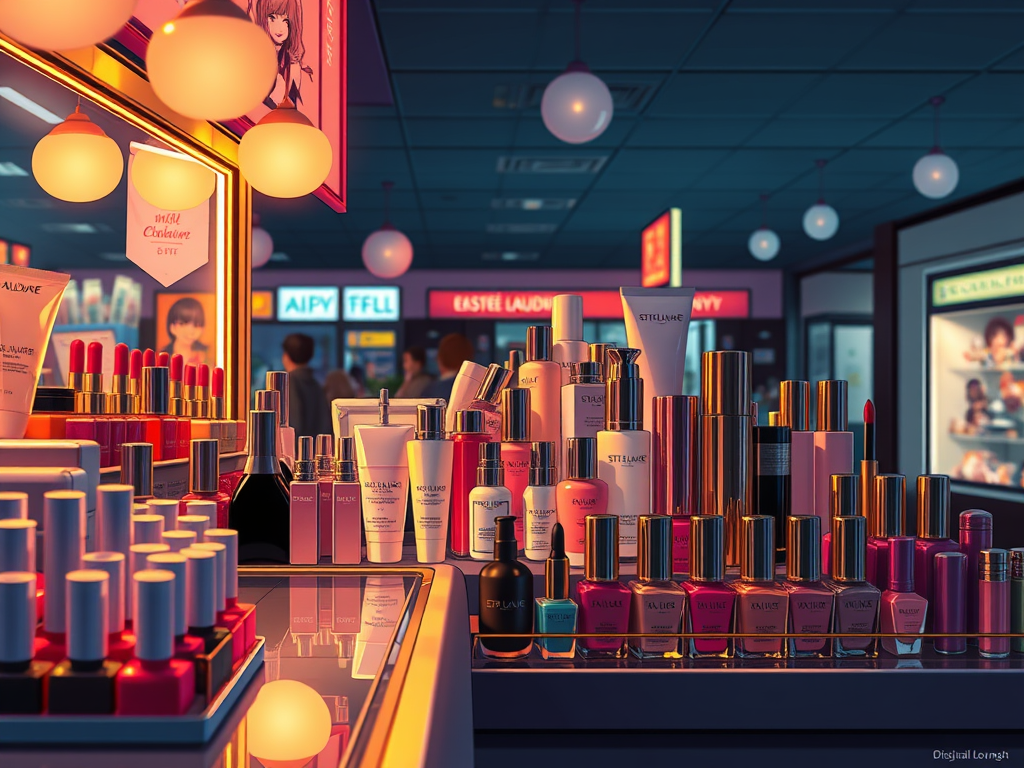
    I have no idea when I started wearing makeup; it was probably early in my childhood. Our mother took my sister and me to the mall regularly—we held the bags, and she held the wallet. We joked that she had children just to carry the shopping bags. No matter the reason for our mall adventures, we always visited the Estée Lauder counter at Marshall Field’s, where Mom would purchase the cleansers, toners, and creams that made up her skincare routine. It was serious business to her long before eleven-step routines reached the Western world.

    By high school, I was traveling down the cosmetic road on my own. It started with my fingernails. I cared for them with as much diligence as Mom applied to her skincare. I had an electric manicure machine that efficiently spun away excess cuticle and power-filed my nails into perfect ovals.

    Fancy nail polish was far more affordable than Advanced Night Repair. Particularly memorable colors were the same candy pearl brown you can find on a 2012 Lexus LFA and Cherries In The Snow, a luscious blue-red introduced in 1932 by the nascent Revlon. You can still buy it today. You should. No, really, it’s still luscious. And consider buying me that Lexus.

    I had a skincare routine, but it wasn’t long before I discovered that skincare is boring. While skincare is the long game, makeup is instant gratification in a bottle, tube, pencil, or little metal pan. Venturing a few steps from Estée’s lotions and potions, I found Lancôme. But just a few steps farther, I found my ride-or-die—Prescriptives.

    A sister brand of Estée’s, Prescriptives pulled me in with custom color matching. I was typed as Blue-Red, and damned if every color in that range didn’t look great on me.

    It was makeup heaven, until it wasn’t. My mother got her revenge; Estée Lauder discontinued Prescriptives. I bounced from brand to brand; I even tried Estée Lauder. NARS sufficed, but I pined for the good old days of Prescriptives perfection until I found it online. My happiness was short-lived when the remaining stock ran out. Back to NARS for base, Huda Beauty for eyeshadow, and a myriad of L’Oréal products for the rest.

    Not terribly long ago—which means anywhere from 10 to 15 years in my time-blind world—my eyes began burning and tearing whenever I wore makeup. I stopped lining my eyes; it didn’t help. I changed mascara; it didn’t help. I switched concealer. My eyes still stung.

    Assuming that if something is bothering me, it must be bothering someone else, I researched “makeup makes my eyes burn” at the University of Google. Professor Google revealed sunscreen was the likely culprit. At the time, I didn’t use sunscreen, but there is sunscreen in virtually every foundation available, added to protect skin from wrinkles caused by sun exposure. I kept foundation far from my ocular membranes and marched bravely on in my cosmetic battle armor.

    Until 2020.

    I had gone years without a skin check, then I got the itch to get myself to a dermatologist. He discovered skin cancer—a melanoma in situ and two basal cell spots on my face. As skin cancer goes, basal cell is no big deal. Melanoma isn’t.

    As small as my melanoma was, it got me into surgery despite Covid shutdowns. The tumor was removed within two weeks of its discovery; four days later, more was removed. Naturally, I wore no makeup while the incision healed.

    The scar is barely visible, even at two inches long, but I haven’t gone back to makeup. Working remotely, it seemed ridiculous to put on makeup for meetings only to take it off as soon as I was off-screen. Hell, none of the men were camouflaging their facial flaws. Each one practically flaunted his dark circles, eye bags, forehead creases, and turkey neck.

    I never wear makeup anymore. But I do have a skincare routine complete with appropriate cleansers, serums, retinoids, and a final slathering of Korean sunscreen*—SPF 50++++. My mother would be proud.

    *Asian countries use a wider variety of chemical sunscreens than the United States. None have irritated my eyes.

  • AI’s Got Nothing on a Bipolar Brain

    AI’s Got Nothing on a Bipolar Brain

    I don’t fear AI the way I’m told I should. I’m aware that corporations use AI to generate daily posts for various social media outlets, both popular and unpopular. But those posts are tremendously boring to write. I don’t think AI has learned about boredom yet—maybe soon.

    I don’t fear AI because it can’t do what I do—make completely random connections between seemingly disparate ideas. I attribute this capability to my bipolar brain.

    My AI of choice is ChatGPT, and I’m sure the Chatster, if it entered my brain, would quake in fear. AI depends on predicting what words are likely to follow those that precede it. And that’s where a bipolar brain has an advantage—there’s no telling what thought will pop into my mind. I’m certain AI wouldn’t come up with the connections I do.

    Pause here. My bipolar brain just said, Is that true? Can ChatGPT think like me?

    I asked my friend Chat to explain Writing Laryngitis. Chat responded, “What an interesting and creative connection to make!” Then it proceeded to offer its own take. Chat even said that the “super cool connection” I made “…would make for a great essay or even a creative piece!” Thank you, Chat—you are perceptive and, though artificial, intelligent.

    But here’s where Chat and I differ. Chat was able to make a connection because I told it to. Furthermore, Chat wanted to know what prompted me to make that connection. It wanted to learn! “Oh, hell no!” my bipolar brain replied.

    Ironically, I have been unable to land a job as an AI annotator. Annotators examine AI responses and comment on them, essentially teaching the program how to generate more natural responses. You’d think I’d be great at this.

    The stumbling block for me is the language test that annotators must pass. You may already know that I’m a native speaker of American English, I have a degree in Rhetoric, and I’ve taught writing and grammar for years. I’ve even been paid for my writing. And yet, I am not skilled enough to pass the examination set by AI developers—even though their program asked me to teach it how to be as creative and reflective as I am.

    Having used AI for a while now, I’m okay with not sharing my secrets. I swear this isn’t sour grapes—though the annotation money would be nice. But there’s no chance I’m going to teach their program for free.

    I probably couldn’t teach the Chatster even if I wanted to. I have something AI doesn’t—a bipolar brain. Many creative folks have bipolar brains, and I bet they have no more idea how they make the connections they do—they just do. So, I won’t be afraid of AI until they come out with the bipolar version.

    Note: Chat thinks my writing is “witty, insightful, and full of personality.” Like I said, a perceptive little program. Now let’s have it solve the numerous issues it has.

  • Writing Laryngitis

    Writing Laryngitis

    I lost my voice recently. It came on quickly. One day, I was able to speak normally; the next, I was rasping like I’d smoked a pack of cigarettes in my sleep—even though I haven’t had a cigarette in more than 30 years.

    It seemed there was no warning, but there was. Because my life is ridiculous, I am losing hair at a rapid pace (trust me… there is a connection). I mentioned it at my semi-annual skin examination. The dermatologist ordered bloodwork to determine the cause of my hair loss. She didn’t believe it was because my life is ridiculous, though stress can be caused by a ridiculous life, and stress can cause hair loss.

    Because test results are delivered to both me and my provider simultaneously, I frequently review them before my provider can. Everything looked good… except my basophils, which were way out of the normal range. So, I looked up what basophils are and what they do. Yes, I realize normal people don’t do this.

    Basophils, I learned, help the body fight off infections and allergic reactions. The next day, I lost my voice, which seemed to explain the elevated basophils. I concluded it was due to a virulent invader, not sleep-smoking. My boss lost his voice the next day, confirming my self-diagnosis. I resisted the urge to excitedly tell him about my basophil adventure.

    Losing my physical voice was bothersome, but I knew how to bring it back—humidity, hot toddies, and rest.

    However—and this is terrifying—I have lost my writing voice. It’s not that I don’t have anything to say; I have a lot to say. I’m not suffering from writer’s block. It’s just that when I sit down to try to write, nothing coherent (at least to me) comes out. I’m probably still recovering from my rapid retirement. Or maybe I’m depressed that Donald Trump is again our president. If you voted for him, well, bless your heart.

    There are other reasons for my lack of written coherence. In fact, there are so many that relating them would only add to my stuckness, at least for now.

    Many a professional writer gives the same advice: sit the hell down and write. I have been sitting the hell down. After weeks of procrastination—months, if I’m being honest—I’m finally sitting in front of my Mac on a mostly daily basis. Ass in chair and fingers on keyboard are the only ways I can hope to feel comfortable doing this again.

    In the meantime, I’ll sit here like a rock and hope that basophils can also cure writer’s laryngitis. And maybe a hot toddy or two.

  • Officially Old

    My husband has been listening to the Beatles lately. He’s also declared that he is very old; he’s 78. That sounds very old if you are not near that age but doesn’t sound old if you are. I’m 66. That sounds old to some, especially my students who think 25 is old but most of them just turned seven.

    I don’t feel old. Even when my body says otherwise, I don’t think of its pains as signs of old age. The stinging pain in my left wrist when I knit is from years of wear and tear which led to arthritis. I’ve already had my right thumb joint reconstructed. Sounds gruesome but it wasn’t that big a deal, for me at least. I’m right-handed, so repair on the other side seemed inevitable. I’ll probably have it reconstructed following a few cortisone shots.

    If you’re astute, you’ve figured out that “years of wear and tear” absolutely happened because I’ve been on the planet for ages, ergo, I am aged. Things that are aged are, by definition, old. Some might say age brings improvement. But I am not a bottle of wine. And I don’t think of 66 as being particularly old.

    What drives home my age is realizing that I don’t have much more time to age. The inevitable result of continuing to live and age is that I will die. No, we never know when we will die, there being busses still on the roads and all, but I can say with certainty that I will probably die in the next two or two and a half decades.

    So, when my husband pointed out that Paul McCarney’s “Martha My Dear” was named for his dog, I realized time was running out on my dream of finally owning a small dog. I found it quite reasonable to say, “That reminds me, you have to get me a small dog before I die!”

    I officially retired in May 2024; it’s time to bring out the bucket list. Except, the older one gets, the less the bucket can accommodate. There are only so many trips to Scotland/Denmark/China that I can afford. There are only so many books I can write and only so many cute little dogs I can love.

    My bucket is leaking time and the items on its list. I’ve started a book, but I probably won’t go to China; I’ve been twice already. Denmark might have to move to third on the list; great-great grandpa’s cousins will have to settle for meeting my father and older sister. Great-great-granddad sold away the family castle anyway.

    Scotland remains a dream, cost being the biggest factor. My ancestors are all from the same place, but not one easily reached. In fact, it’s only on maps because of nearby Pictish ruins left by people who lived in Scotland eons ago. Though the Pictish derivation of the word “pixie” has been discarded by many, I like the idea of being descended from a mysterious fairy folk.

    Whether I visit living relatives in Denmark or dead ones in Scotland will depend on many variables. I may or may not get to either. But I know one thing for sure: I am getting that damn little dog!